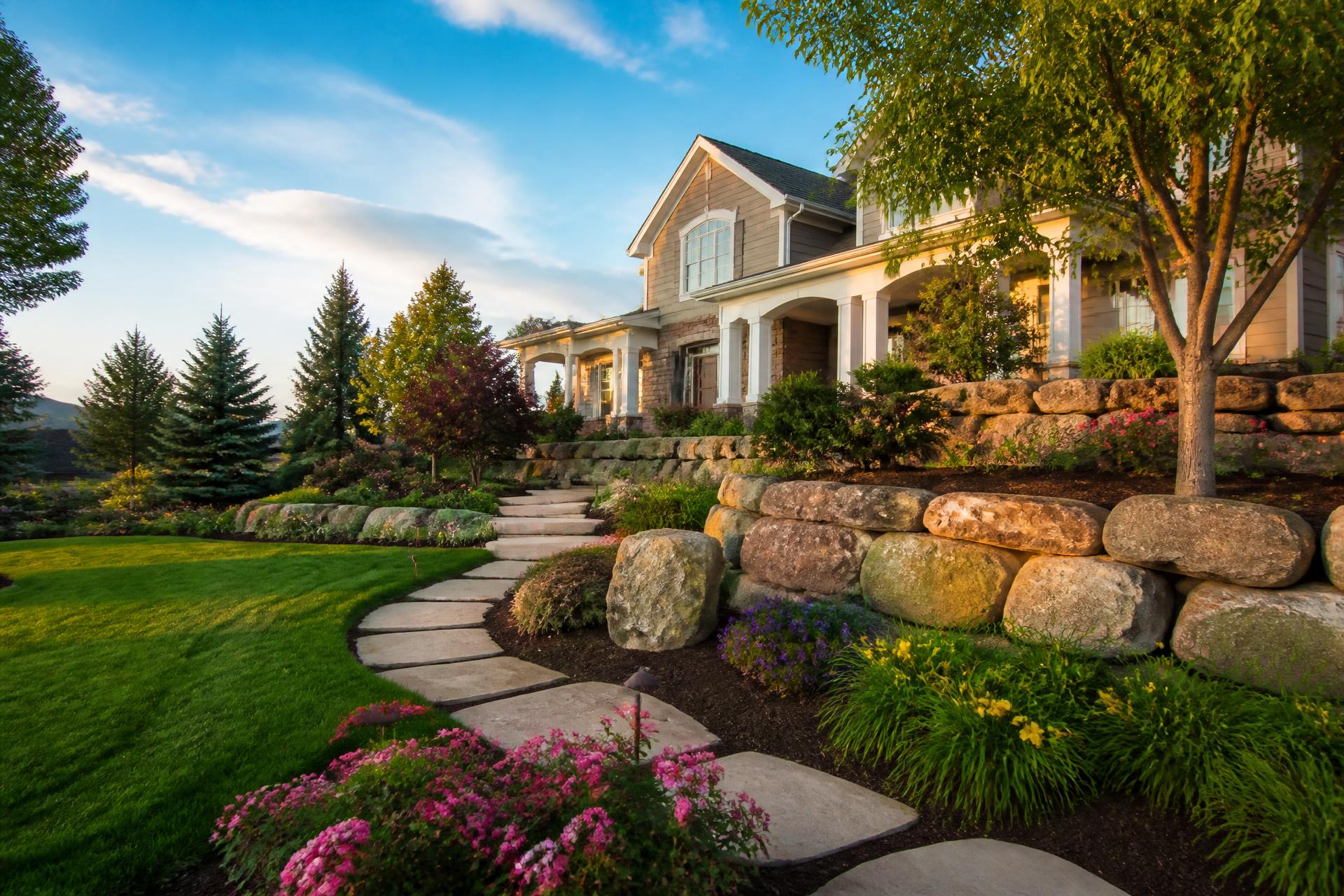
The recurring landscaping mistakes we see on Butte County properties — and why they end up costing far more to fix than to avoid.
Most expensive landscaping problems didn't start as landscaping problems — they started as a shortcut somewhere earlier in the process that seemed reasonable at the time. Skipped soil prep, ignored drainage, plants chosen for looks rather than survivability, mulch piled where it shouldn't be. None of these mistakes are dramatic on their own, but each one compounds over a season or two into a bill that's several times what doing it correctly the first time would have cost.
The mistakes below are the ones we see repeatedly across Butte County properties, from Paradise Ridge lots to Chico valley yards to Oroville acreage. Most of them share a common root: treating landscaping as a purely cosmetic decision rather than one that has to account for our soil, our rainfall pattern, our heat, and in a lot of this county, real fire exposure.
Mistake 1: Planting before fixing drainage
This is the single most expensive mistake we see, and it's almost always invisible until the first real storm. A property owner installs a beautiful planting bed, and within a season or two the plants are drowning, the mulch has washed away, or water is pooling against the foundation — because the grading and drainage underneath the bed was never actually correct.
Plants don't fail because they were the wrong species most of the time — they fail because they're sitting in water that has nowhere to go, or because runoff from an ungraded slope is eroding the bed faster than it can establish. Fixing this after the fact means ripping out plants and mulch that were never the real problem, correcting the grade, and replanting — essentially paying for the same bed twice.
The fix is sequencing: grade and drainage first, then planting. A quick check of how water moves across the specific spot during a heavy rain, before anything is installed, is far cheaper than redoing a failed bed a year later.
Mistake 2: Skipping soil prep
Butte County soil is rarely plant-ready straight out of the ground. Ridge properties often sit on decomposed granite that's fast-draining but nutrient-poor; valley properties frequently have dense clay that compacts easily and drains slowly. Planting directly into either without amendment is a common shortcut that shows up later as stunted growth, poor establishment, or plants that simply never thrive despite watering and fertilizing correctly.
The cost of proper soil prep — tilling, amending, breaking up compaction — is a fraction of the cost of replacing plants that failed to establish because their roots never had a real chance in unprepared soil. It's one of the least visible parts of a landscaping job and one of the easiest to underestimate.
Mistake 3: Choosing plants for the nursery display, not the property
A plant that looks great in a shaded nursery display in April can struggle badly once it's in full valley sun facing a 100-degree July, or once it's exposed to consistent deer browsing in a Magalia yard. Choosing plants based on how they look at the point of purchase, rather than how they'll perform in the specific sun exposure, soil, and wildlife pressure of the property, leads to repeated replacement — plants dying back each summer and getting replanted the following spring, year after year.
This mistake is expensive in a compounding way: it's not one bad purchase, it's an ongoing annual cost that never resolves because the underlying mismatch between plant and site was never corrected.
Mistake 4: Mulch or dense planting against the structure
In fire-prone parts of Butte County — most of the Ridge and foothill communities — bark mulch piled against siding or dense shrubs planted right up against the house isn't just a landscaping preference, it's a real fire risk. We've seen properties fail fire inspections specifically over foundation planting and mulch that looked fine aesthetically but violated basic defensible space guidance.
Beyond fire risk, dense planting against a structure also traps moisture against siding and foundations, which contributes to rot and pest issues over time. The fix — rock, gravel, or simply bare, well-maintained ground in the first several feet around a structure — costs far less than either a failed inspection or the structural repair from long-term moisture damage against the house.
Mistake 5: Ignoring mature plant size
Shrubs and trees planted too close together, or too close to a structure, look proportionate for the first year or two and then become a recurring maintenance cost — constant pruning to keep them off the house, or eventual removal and replacement once they've outgrown the space entirely. It's a mistake that comes from planning around how the yard looks on day one rather than how it will look and function in five years.
Spacing plants for their mature size costs nothing extra at installation — it just means a slightly less full look in the first season, which fills in naturally as the plants grow. The alternative is paying for corrective pruning indefinitely, or eventually paying to remove and replace an overgrown plant that's now damaging a fence, foundation, or roofline.
Mistake 6: DIY retaining walls without drainage
A short retaining wall built without a compacted base, proper backfill, and drainage behind it can look fine for a season or two and then fail — bulging, leaning, or collapsing, usually during or after a heavy winter storm when the backfill soil becomes saturated. Rebuilding a failed wall costs significantly more than building it correctly the first time, because it usually means excavating out failed material, correcting drainage that should have been there from the start, and rebuilding from scratch.
This is one of the clearest cases where a modest upfront investment in doing it right avoids a much larger repair bill later, and it's why we're cautious about recommending DIY approaches for anything beyond a low, purely decorative wall.
Mistake 7: Letting cleared land go unmaintained
A property that's had brush cleared or a lot opened up isn't done — cleared ground on Butte County's Ridge and foothill properties regrows fast, often needing a maintenance pass within 12 to 18 months. Property owners who treat a clearing job as a one-time task often find themselves paying for a much larger clearing job a few years later, once regrowth has re-established with the same density it started with, sometimes worse due to opportunistic invasive species like scotch broom moving into freshly opened ground.
A modest, regular maintenance pass is consistently cheaper over a five-year period than letting a lot regrow completely and re-clearing it from scratch.
Mistake 8: Overwatering or underwatering new plantings
New plantings need a different watering approach than established landscaping, and getting it wrong in either direction is a common and costly mistake. Underwatering during the critical establishment period, especially through a Butte County summer, kills plants before their root systems can support themselves. Overwatering, particularly in heavier clay soils that don't drain quickly, can rot roots just as effectively.
The fix is a deliberate watering schedule for the establishment period — typically more frequent, deeper watering for the first season, tapering as roots establish — rather than treating new and established plants the same way on one irrigation zone.
The pattern behind all of these
Nearly every mistake on this list comes from skipping a step that isn't visible in the finished result on day one — the drainage under a bed, the soil prep before planting, the base under a wall, the maintenance plan after a clearing job. These are exactly the parts of a project that are easiest to cut corners on because nobody sees them once the job looks finished, and exactly the parts that determine whether the work holds up in year two, three, and beyond.
A site walk before any significant landscaping decision — new planting, a retaining wall, a lot clearing project — is the cheapest way to avoid most of these mistakes. It's far less expensive to plan around drainage, soil, sun exposure, and fire risk from the start than to correct a project that skipped that step.
Frequently asked questions
Planting before fixing drainage. It looks fine on install day and fails within a season or two, requiring the bed to essentially be rebuilt from scratch.
Related services & areas
Keep reading
- Decorative Rock vs. Mulch: Which Is Right for Your Property?
A practical comparison of rock and mulch for Butte County yards — cost, water use, fire exposure, and maintenance over time.
- Landscape Design Ideas for Butte County
Design approaches that actually hold up to Butte County heat, clay and granite soils, deer, and winter runoff — not generic curb-appeal advice.
- How to Choose the Right Landscaping Contractor
What to actually ask before hiring a landscaping or lot clearing contractor in Butte County, and the red flags worth walking away from.
Want this handled on your property?
Send photos and a few details and we’ll get you a written estimate — Paradise, Magalia, Chico, Oroville, and throughout Butte County.