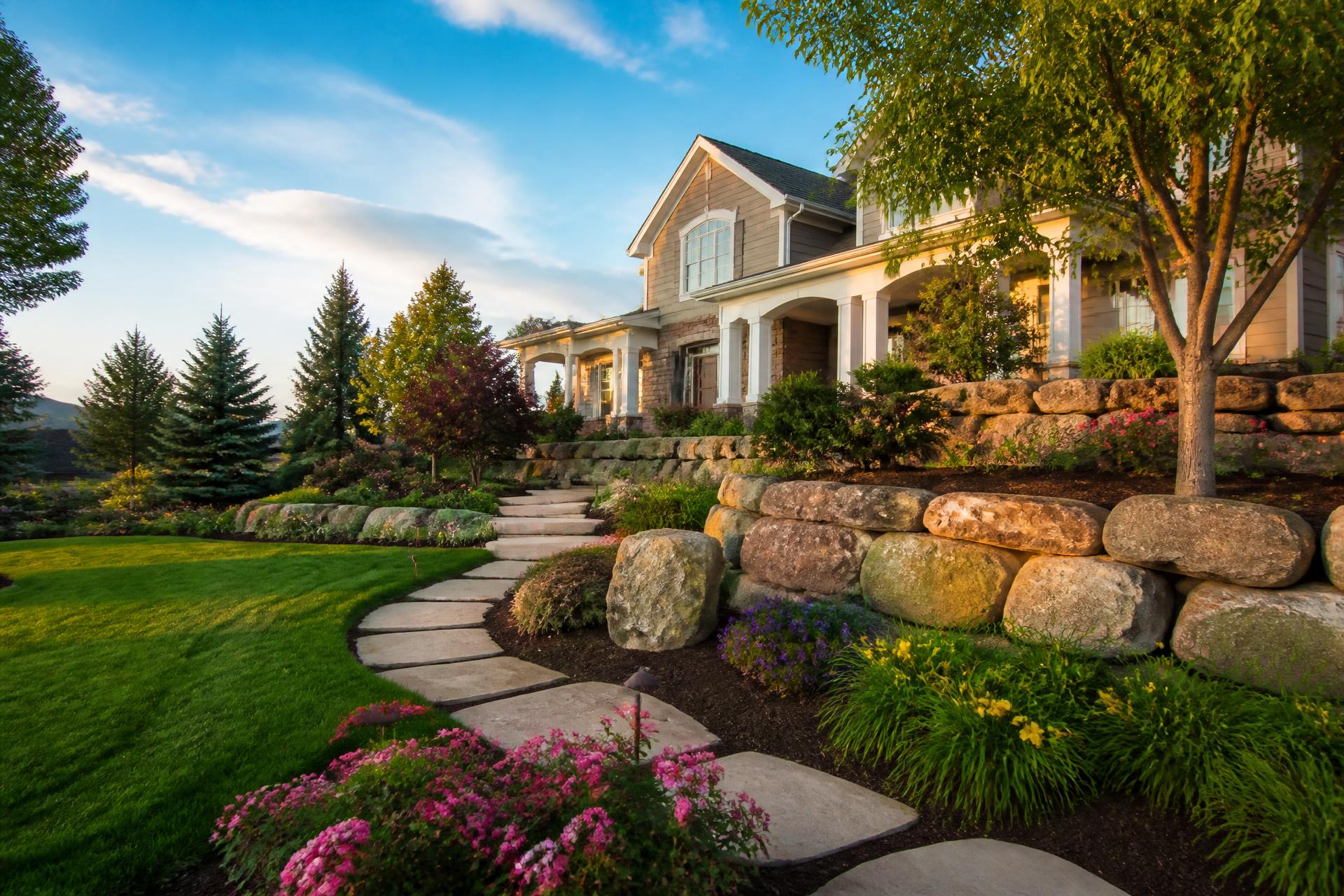
A season-by-season maintenance approach for Butte County properties — fire prep, drainage, planting, and the work each season actually calls for.
Butte County doesn't have a mild, even climate where the same maintenance routine works month after month. It swings from a genuinely wet winter with real runoff volume, to a fast-drying spring, to a long, dry, hot summer with real fire exposure, to a fall window that's the best time to prep for the next winter. Maintenance timed to those swings, rather than a generic calendar, is what keeps a property looking good and staying safe year-round.
This applies differently depending on where the property sits. A Ridge property in Paradise or Magalia has fire mitigation and erosion concerns that a valley property in Chico doesn't carry to the same degree, while valley properties deal more with heat stress on planting and lawn during the long dry season. The seasonal breakdown below covers both, with notes on where the priorities shift.
Late winter and early spring (February–April)
This is the window right after the bulk of winter rain, when the ground is still workable but drying out, and it's the best time to assess what the winter did to the property before growth picks up and hides the evidence.
- Walk the property specifically looking for erosion channels, washed-out mulch, or bare soil exposed by winter runoff
- Check culverts, swales, and drainage channels for debris that built up over winter and clear them before spring storms
- Inspect for winter storm damage — broken branches, shifted rock or mulch, settled retaining wall backfill
- Refresh mulch in planted beds before the weather warms, so it's in place before summer heat and evaporation ramp up
- This is also a good window for new planting — soil is moist and temperatures are mild enough for new roots to establish before summer stress arrives
Late spring (April–May)
Growth is fast in this window, and it's also the last reliable stretch before summer heat and fire season begin ramping up in earnest — which makes it the priority window for defensible space work on Ridge and foothill properties.
- Begin or complete Zone 0 through Zone 2 defensible space clearance — this window, before things dry out completely, is the best time to get ahead of fire season rather than scrambling in June
- Cut back brush and scotch broom regrowth on cleared parcels — regrowth on open Ridge ground often needs a pass every 12 to 18 months, and late spring is a natural checkpoint
- Set or check irrigation systems before the dry season demand hits, catching leaks or coverage gaps while water use is still relatively low
- Fertilize and mulch lawn and planting beds while soil moisture is still decent, giving plants a head start before the dry stretch
Summer (June–September)
Summer in Butte County is long, hot, and dry — valley temperatures regularly exceed 100 degrees, and even Ridge properties see extended stretches with no meaningful rain. Maintenance shifts from growth and planting work to protection and monitoring.
- Water deeply but less frequently for established plants, which encourages deeper root growth and better heat tolerance than frequent shallow watering
- Monitor irrigation closely — a broken emitter or stuck valve that goes unnoticed for a week in July can kill plants that would have survived a similar issue in April
- Keep an eye on fuel load around structures — grass and brush that was green in May cures fast and becomes fire fuel by midsummer, so a mid-season mowing or brushing pass is often worth scheduling for Ridge and foothill properties
- Avoid heavy pruning or major planting during peak heat — most new work stresses plants more than it helps them until temperatures moderate
- Keep gutters, roof valleys, and areas around the structure clear of dried leaf and needle litter, which becomes fire fuel in the heat
Fall (October–November)
Fall is arguably the most important maintenance window of the year in Butte County, because it's the last chance to prepare drainage and defensible space before winter rain arrives, and it's also the ideal time for planting since the ground is cooling but not yet saturated.
- Clear gutters, roof valleys, and areas around the base of the structure of dried leaves and needles before the first significant rain
- Do a final defensible space check — cured summer growth should be cleared or reduced before wet season begins, since dry fuel doesn't disappear just because rain is coming
- Clean out and inspect drainage channels, culverts, and swales before they're tested by the first real storm of the season
- This is the best planting window of the year for trees, shrubs, and perennials — cooling soil and upcoming rain let roots establish over winter with far less supplemental watering than spring or summer planting requires
- Apply a fresh layer of mulch to beds heading into winter, which helps regulate soil temperature and reduce erosion from early storms
Winter (December–February)
Winter is the wettest and, on the Ridge, sometimes the coldest stretch of the year, and maintenance shifts toward monitoring drainage performance and handling storm aftermath rather than active planting or growth work.
- Watch how water actually moves across the property during and after storms — this is the best time to spot a drainage problem that wasn't obvious in dry months
- Clear storm debris from drainage channels, driveways, and around structures promptly, before it dams up and redirects water somewhere unwanted
- Check retaining walls and slopes after heavy rain events for any new bulging, leaning, or soil movement
- Hold off on major planting or heavy soil work in saturated clay areas, since working wet clay compacts it and undoes a lot of the benefit of prior soil amendment
- Use slower winter weeks to plan spring projects — landscape installs, hardscape work, and larger clearing jobs are easier to schedule and quote before the spring rush
Differences by property type
Ridge and foothill properties — Paradise, Magalia — carry heavier fire mitigation and erosion maintenance demands, since fuel load and slope drainage are constant, recurring concerns rather than one-time fixes. Valley properties in Chico deal less with fire fuel and erosion but more with heat stress management on lawns and planting through the long, hot summer stretch, and with heavier clay soil that needs careful timing around wet and dry periods for any soil work.
Larger acreage properties, common around Oroville and the more rural parts of the county, often benefit from a maintenance schedule built around access — getting brushing, mowing, and drainage work done while equipment access is easiest, typically in the drier shoulder seasons rather than the wettest or driest extremes.
Building a maintenance routine that actually gets followed
The properties that stay in the best shape year over year aren't necessarily the ones with the most expensive landscaping — they're the ones where a handful of seasonal checkpoints happen reliably: a spring defensible space pass, a fall gutter and drainage check, and a fall or spring mulch refresh. Missing one season's maintenance rarely causes an immediate problem, but skipping the same checkpoint two years running is usually when small issues turn into real repairs, whether that's an eroded slope, a failed drainage channel, or a fuel load that's built up past what a quick pass can handle.
Frequently asked questions
For Ridge and foothill properties, an annual defensible space pass before fire season is the highest-value task. For valley properties, staying ahead of drainage and irrigation issues through the long dry summer tends to matter most.
Related services & areas
Keep reading
- Common Landscaping Mistakes That Cost Property Owners Money
The recurring landscaping mistakes we see on Butte County properties — and why they end up costing far more to fix than to avoid.
- How to Choose the Right Landscaping Contractor
What to actually ask before hiring a landscaping or lot clearing contractor in Butte County, and the red flags worth walking away from.
- The Defensible Space Checklist Inspectors Actually Look For
Zone by zone, what CAL FIRE inspectors check on a foothill property — and the items most homeowners miss.
Want this handled on your property?
Send photos and a few details and we’ll get you a written estimate — Paradise, Magalia, Chico, Oroville, and throughout Butte County.